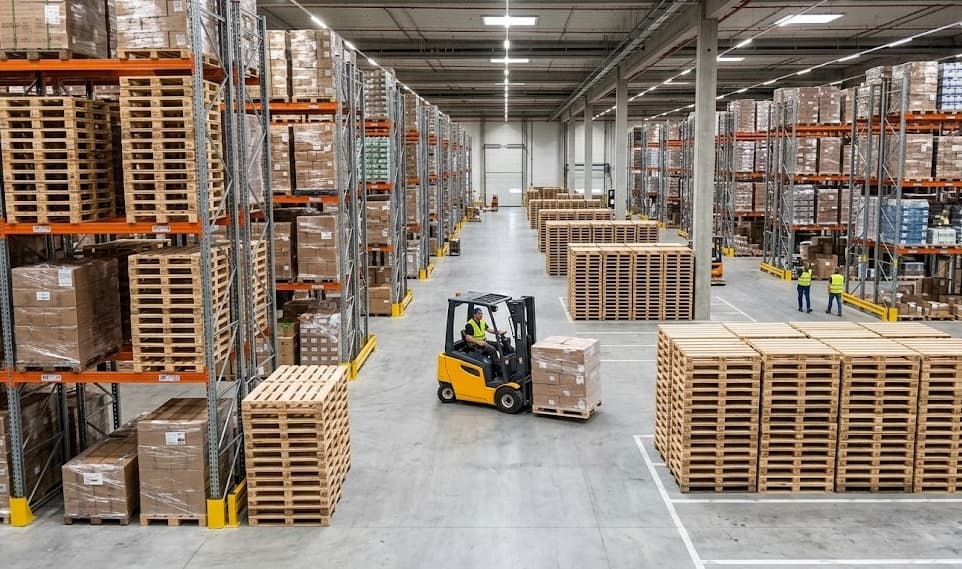
The 48x40-inch GMA pallet is the workhorse of the American supply chain. It fits standard truck trailers, warehouse racking, and dock equipment. It is universally available, competitively priced, and understood by every logistics professional in the country. But not every product, not every industry, and not every shipping requirement fits neatly onto a 48x40 platform.
When your load is too long, too wide, too heavy, too fragile, or simply the wrong shape for a standard pallet, you need a custom solution. Custom pallets are engineered to match your specific product dimensions, weight distribution, handling requirements, and transportation constraints. They cost more than off-the-shelf pallets, but for the right applications, they deliver enormous value by preventing product damage, maximizing truck utilization, improving handling efficiency, and meeting regulatory or customer requirements that standard pallets cannot satisfy.
When Standard Pallets Fall Short
There are several common scenarios where a standard pallet is the wrong tool for the job. Recognizing these situations early — before you discover the problem on a loading dock at 3 AM — saves time, money, and product.
The Custom Pallet Design Process
Designing a custom pallet is an engineering exercise, not a guessing game. At Phoenix Pallet Recycling, our process begins with a detailed assessment of your application. We need to understand not just what the pallet carries, but how it is loaded, stored, transported, and unloaded — because each of those stages imposes different forces on the pallet structure.
Information We Need for Custom Design
With this information, we develop a specification that defines the pallet dimensions, wood species, board thicknesses and widths, stringer or block configuration, fastener type and pattern, and any special features. For complex applications, we use the Pallet Design System (PDS) software developed by Virginia Tech — the industry-standard tool for engineering wood pallets to specific load and performance requirements.
Before committing to a full production run, we build prototypes and test them under realistic conditions. This might include static load testing on a compression machine, dynamic load testing in a simulated truck environment, or a real-world trial where sample pallets are sent through the customer's actual supply chain with monitoring to assess performance.
Cost Factors: What Drives Custom Pallet Pricing
Custom pallets are more expensive than standard pallets — that is an unavoidable reality of non-standard manufacturing. But the premium is often smaller than people expect, and the total cost impact can actually be positive when you account for the downstream savings.
Dimensions
Larger pallets use more material; unusual sizes may require custom-cut lumber
Wood Species
Hardwood costs 30-50% more than softwood per board foot
Board Thickness
Heavier loads need thicker boards — 3/4 inch vs. standard 5/8 inch
Fastener Upgrades
Ring-shank nails, screws, or bolts for high-stress applications
Order Volume
Per-unit cost drops significantly at quantities over 500 units
Lead Time
Rush orders command premiums; planned orders with 2-3 week lead time get best pricing
The hidden savings from custom pallets often outweigh the price premium. A custom pallet that is three inches narrower than standard might allow you to fit an additional row of product in each trailer, reducing the number of truckloads per month. A reinforced pallet that survives 25 trips instead of 10 cuts your per-trip cost in half. A pallet designed to match your product footprint exactly can eliminate the edge overhang that causes product damage in transit.
We always recommend that customers evaluate custom pallets on a total cost basis: the pallet price plus product damage avoided, transportation savings from better cube utilization, labor savings from faster handling, and reduced pallet replacement frequency. When all factors are considered, custom pallets frequently deliver a positive return on investment within the first quarter of use.
Real-World Custom Pallet Applications
To illustrate the diversity of custom pallet work, here are several applications we have built for customers in the Phoenix area. Each required a solution that no standard pallet could provide.
A solar panel manufacturer needed pallets that could safely transport fragile glass panels in a vertical orientation. We designed an A-frame style pallet with angled supports, anti-vibration pads, and securing points for ratchet straps — protecting panels worth thousands of dollars each during cross-country truck shipments.
An aerospace parts distributor required pallets that met MIL-STD-1660 specifications for military packaging, including specific wood grades, moisture content limits, and construction methods documented with certificates of compliance. We built these to specification and maintained the traceability documentation their contracts required.
A concrete products company needed heavy-duty pallets rated for 6,000 pounds of static load — more than double the capacity of a standard GMA pallet. We engineered a block-style pallet with 6/4 hardwood deck boards and triple-stringer construction that handled the load with a comfortable safety margin, then built a return program where we picked up empty pallets from job sites and brought them back for reuse.