Grade A Premium Pallets
Grade A is commonly described as the highest-quality tier of recycled pallets, close to new in condition and appearance. Ask the supplier what Grade A means for them.
Request a Quote
Fill out the form and a partner supplier will follow up with a customized quote.
What Makes a Pallet Grade A?
Grade A is commonly described as the top tier of recycled pallets: in like-new or lightly used condition, with strong structural integrity, accurate dimensions, and a clean appearance. These pallets have either been used only once or twice, or are in such good condition after careful use that they are functionally close to new pallets.
Grade A pallets typically have few or no repaired or replaced boards. Deck boards, stringers, and blocks are mostly original, securely fastened, and free from significant damage. The wood surface is clean, without heavy staining, mold, chemical residue, or contamination. Nails are flush-driven with no protrusions, and overall dimensions are close to nominal. There is no single legal definition of Grade A, so ask the supplier what it means for them.
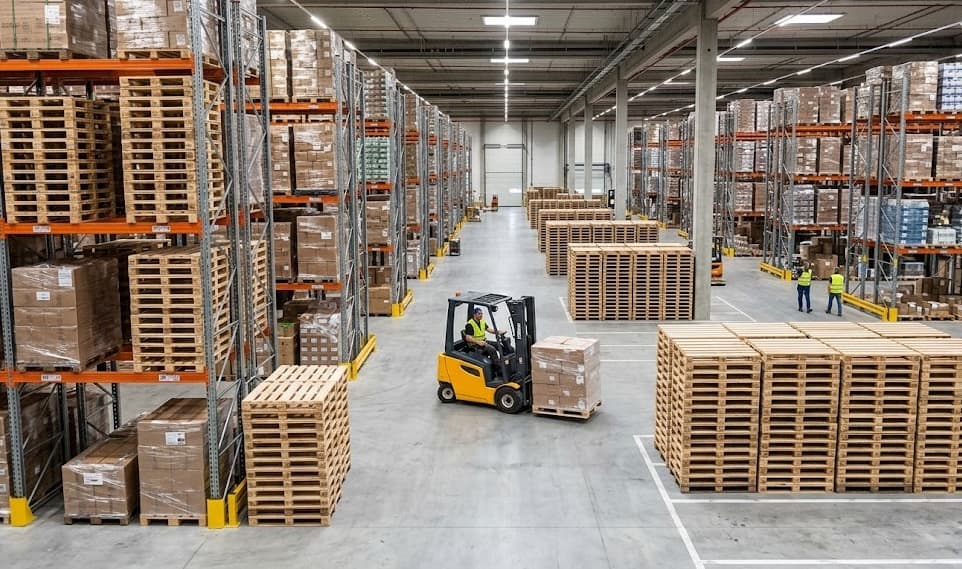
This level of quality is commonly requested by operations that rely on automated material handling equipment, such as automated storage and retrieval systems (AS/RS), conveyor-fed palletizers, and robotic pick-and-place systems. These machines depend on pallets with consistent dimensions to function reliably. A pallet that is out of spec can cause jams, mis-feeds, and downtime.
Premium Grade
Often the highest-cost recycled grade
At a Glance
- Few or no repaired boards
- Clean, unstained surfaces
- No protruding nails
- Close to nominal dimensions
- Mostly original fasteners
- Straight, unwarped stringers
Grade A: Commonly Described Specifications
Deck Boards
- •All original boards — no replacements
- •No cracks, splits, or broken ends
- •Minimum 5/8" thickness
- •Board spacing consistent throughout
- •No excessive weathering or soft spots
Stringers / Blocks
- •No cracks at notches or along grain
- •Notch dimensions per GMA spec
- •No rot, insect bore holes, or fungal decay
- •Straight with no bowing or twisting
- •Full structural capacity maintained
Fasteners
- •All nails flush-driven (no protrusions)
- •No missing fasteners
- •Ring-shank or screw-shank nails preferred
- •No staples as primary fasteners
- •No nail plate separation
Surface Condition
- •Clean wood — no heavy staining
- •No mold, mildew, or biological growth
- •No chemical contamination or odors
- •No grease, oil, or food residue
- •Suited to clean-handling requirements; confirm with the supplier
Dimensions
- •Close to nominal on length and width
- •Pallet sits flat — no racking or twist
- •Height consistent across all stringers
- •Fork entry openings within GMA tolerance
- •No overhang of deck boards past stringers
Treatment & Documentation
- •ISPM 15 heat treatment can be requested for export
- •Treated pallets carry the IPPC mark
- •Ask the supplier what documentation is available
- •There is no single legal grade definition
- •Confirm the grade criteria with the supplier
When Grade A Is the Right Choice
Automated Warehouses
Automated storage and retrieval systems, conveyor lines, and robotic palletizers depend on dimensional consistency. A single out-of-spec pallet can halt an automated line. Grade A pallets are commonly chosen for the tight tolerances these systems require.
Clean-Handling Applications
Operations that ship food, beverages, or other goods sensitive to contamination often ask for pallets that are clean, free from contamination, and structurally sound. Grade A pallets are commonly requested for this reason. Ask the supplier about condition and any requirements your customers set.
International Export
When your pallets represent your brand at an overseas destination, appearance matters. Grade A pallets with ISPM 15 heat treatment and the IPPC mark arrive looking professional and consistent with international phytosanitary requirements. Confirm the destination country's current requirements.
Premium Retail Distribution
Retailers may inspect inbound pallet quality. Grade A pallets are commonly chosen to help loads pass receiving-dock checks and avoid chargebacks, rejections, and delays that can cost more than the pallet itself.
Grade A Pricing
Grade A recycled pallets are often priced above other recycled grades, but reused pallets often cost less than new pallets of the same size and type. Ask for a quote to compare.
Pallets that qualify as Grade A are commonly those that have been lightly used and need little or no repair, which is why they are priced differently from heavily repaired pallets. Pricing is by quote from partner suppliers.