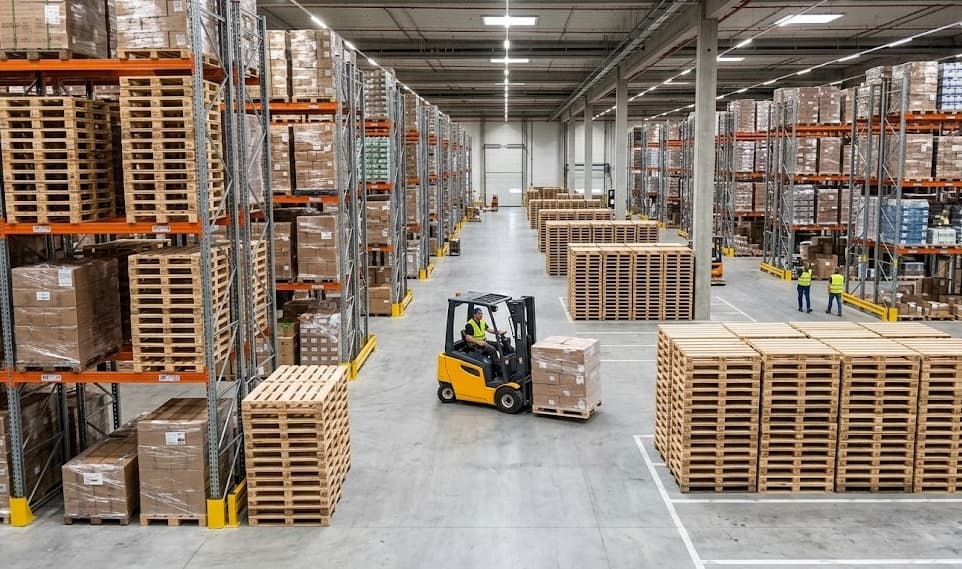
The pallet industry is one of the largest consumers of lumber in the United States. An estimated 513 million new wood pallets are manufactured every year, consuming approximately 4.5 billion board feet of hardwood and softwood lumber. That is a staggering amount of raw material — and without recycling, a significant portion of those pallets would end up in landfills after just a few uses.
At Phoenix Pallet Recycling, sustainability is not a marketing slogan. It is the foundation of our business. Every pallet we recycle, repair, and put back into circulation represents a measurable positive impact on the environment. Here is a detailed look at the numbers behind pallet recycling's environmental benefits.
Trees Saved: The Lumber Equation
A single standard 48x40 pallet requires approximately 10 to 12 board feet of lumber. Each mature tree yields roughly 250 to 300 board feet of usable lumber. That means every 25 pallets recycled instead of manufactured from virgin wood saves one tree from being harvested.
The U.S. pallet recycling industry recovers and reuses over 450 million pallets each year. This represents roughly 70% of the total pallet pool — a remarkable recycling rate that exceeds most other packaging materials. The remaining 30% includes pallets that are processed into mulch, animal bedding, biomass fuel, and engineered wood products, so even pallets that cannot be reused in their original form still avoid the landfill.
The forest conservation impact is significant. American forests absorb approximately 16% of total U.S. carbon dioxide emissions annually. By reducing lumber demand through pallet recycling, we help keep more forests standing and actively sequestering carbon — creating a compounding environmental benefit over time.
Landfill Diversion: Keeping Wood Out of the Ground
Wood pallets are among the largest single-item contributors to commercial solid waste in the United States. The Environmental Protection Agency (EPA) estimates that wood pallets and containers account for approximately 8% of all wood waste generated nationally. Without recycling, hundreds of millions of pallets would enter municipal and commercial landfills every year.
When wood decomposes in a landfill — particularly in anaerobic conditions below the surface — it releases methane, a greenhouse gas with 80 times the warming potential of carbon dioxide over a 20-year period. A single pallet decomposing in a landfill produces approximately 3.5 kg of methane equivalent emissions over its decomposition lifetime.
Multiply that by the hundreds of millions of pallets recycled annually, and the climate impact of pallet recycling becomes enormous. The industry prevents an estimated 1.5 billion kg of CO2-equivalent emissions from entering the atmosphere each year through landfill diversion alone — before accounting for the avoided emissions from reduced lumber production.
Carbon Footprint Reduction: The Full Lifecycle
A lifecycle analysis of pallet manufacturing reveals that recycled pallets have a dramatically lower carbon footprint than new pallets. Manufacturing a new 48x40 GMA pallet from raw lumber involves logging, transportation to the sawmill, kiln drying, milling, transportation to the pallet manufacturer, and assembly. Each of these steps consumes energy and generates emissions.
Carbon Footprint Comparison
Source: Based on lifecycle analysis studies of wood pallet production and recycling processes.
Recycling a pallet involves collection, inspection, repair (replacing damaged boards), and redistribution — a process that generates approximately 80% fewer emissions than manufacturing from scratch. The energy savings come primarily from avoiding the logging, sawmilling, and kiln-drying stages, which are the most energy-intensive steps in new pallet production.
For businesses tracking their Scope 3 emissions — the indirect emissions in their supply chain — switching from new to recycled pallets is one of the simplest and most impactful changes available. A company using 10,000 pallets per year can reduce its supply chain emissions by over 235 metric tons of CO2 annually by switching to recycled pallets.
What Your Business Can Do
Every business that uses pallets has an opportunity to make a meaningful environmental impact. Here are concrete steps you can take today:
At Phoenix Pallet Recycling, we make it easy for businesses across Phoenix and Arizona to participate in the circular pallet economy. We buy your used pallets, recycle and repair them to meet strict quality standards, and sell them back into the supply chain — keeping wood out of landfills and reducing the demand for virgin lumber with every pallet we handle.