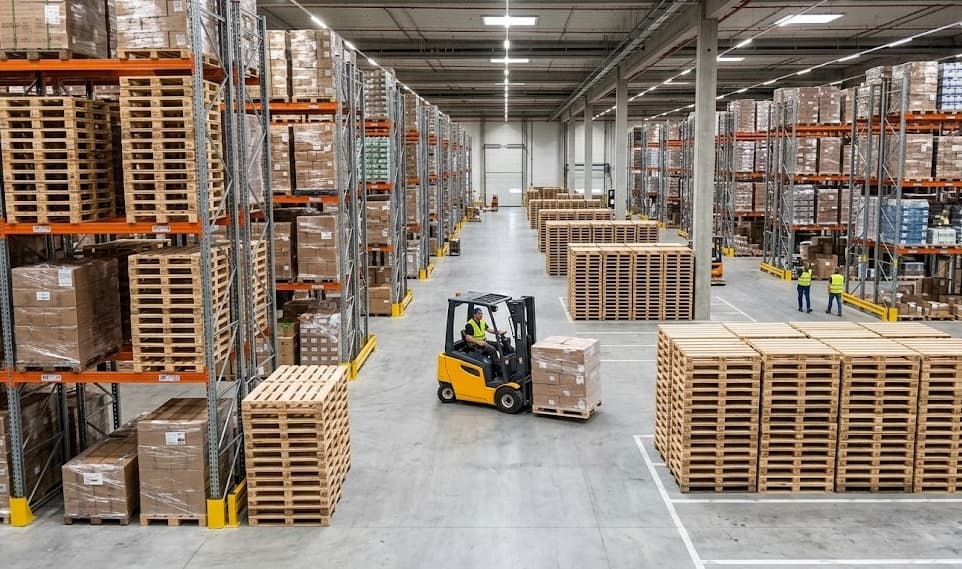
Every year, hundreds of millions of wood pallets reach the end of their useful shipping life in the United States. Under a traditional linear economy model, those pallets would be manufactured, used once or twice, and then discarded in a landfill. Raw materials go in one end, waste comes out the other. It is a model that consumes enormous quantities of lumber and generates millions of tons of solid waste annually.
The circular economy offers a fundamentally different approach. Instead of treating used pallets as waste, a circular model treats them as a resource — a raw material that can be repaired, recycled, repurposed, or converted into entirely new products. At Phoenix Pallet Recycling, we operate at the center of this circular system, ensuring that every pallet we handle stays in productive use for as long as physically possible. Here is a closer look at how circular economy principles are transforming wood waste into valuable resources across multiple industries.
Linear vs Circular: Two Approaches to Pallets
In a linear economy, the lifecycle of a pallet is straightforward and wasteful. Trees are harvested, lumber is milled, pallets are assembled, products are shipped, and the pallet is thrown away. The entire value of the wood — the decades of growth, the energy invested in harvesting and processing — is discarded after a single use cycle. Nationally, this linear approach once sent over 150 million pallets to landfills every year.
A circular economy reverses this pattern by designing waste out of the system. Used pallets are collected, inspected, and sorted. Those in good condition are repaired and resold. Pallets that cannot be repaired are dismantled, and their usable boards become repair stock for other pallets. Wood that cannot be reused structurally is ground into mulch, processed into animal bedding, converted into biomass fuel, or milled into reclaimed lumber for furniture and construction. At every stage, the goal is to extract maximum value from the material before it ever reaches a disposal site.
The pallet industry has actually become one of the best examples of circular economics in practice. Today, approximately 95% of all wood pallets in the United States are recovered for reuse, repair, or recycling — a rate that far exceeds most other packaging materials. This did not happen by accident. It happened because recycled pallets are cheaper than new ones, creating a powerful economic incentive that aligns business interests with environmental outcomes.
Biomass Energy: Turning Scrap Wood Into Power
When pallet wood is too damaged, contaminated, or degraded for structural reuse, it still holds significant energy value. Biomass energy facilities accept ground pallet wood as fuel to generate electricity and heat. The wood chips are burned in controlled combustion systems that capture the thermal energy and convert it into usable power for industrial facilities, municipal grids, and commercial heating systems.
Biomass from pallet wood is considered carbon-neutral because the carbon released during combustion was originally absorbed from the atmosphere by the growing tree. This stands in contrast to fossil fuels, which release carbon that has been locked underground for millions of years. In Arizona, where energy demand is high and growing, biomass from recycled pallets provides a supplemental renewable energy source that reduces dependence on natural gas and coal.
A single truckload of ground pallet wood can generate enough energy to power an average American home for approximately two months. Across the national pallet recycling industry, millions of tons of wood are diverted to biomass energy production annually, displacing a measurable amount of fossil fuel consumption.
Mulch and Landscaping: From Warehouse to Garden
Ground pallet wood makes excellent landscape mulch. After pallets are dismantled and the wood is passed through industrial grinders, the resulting material is screened for size consistency and inspected for contaminants like nails or staples. The finished mulch is used in residential landscaping, commercial properties, highway medians, playgrounds, and erosion control applications throughout the Phoenix metropolitan area and beyond.
In the arid Arizona climate, mulch plays a critical role in water conservation. A three-inch layer of wood mulch can reduce soil moisture evaporation by up to 70%, significantly reducing irrigation requirements for landscaped areas. This means that recycled pallet wood does not just avoid the landfill — it actively contributes to water conservation in a state where every gallon of saved water matters. Many municipalities and HOAs in the Phoenix area now specify recycled wood mulch in their landscaping standards, creating steady demand for this byproduct of pallet recycling.
Animal Bedding: Clean and Absorbent
Shavings and chips produced from untreated, clean pallet wood are widely used as animal bedding in equestrian facilities, poultry farms, livestock operations, and pet bedding manufacturing. The wood fibers are naturally absorbent, help control odor, and provide comfortable cushioning for animals. Kiln-dried pallet wood is particularly desirable for animal bedding because the heat treatment process eliminates pathogens and reduces moisture content.
Arizona's horse industry is substantial, with an estimated 175,000 horses across the state. Equestrian facilities require a constant supply of quality bedding material, and recycled pallet shavings provide an affordable, locally sourced alternative to imported pine shavings. After use, the soiled bedding can be composted, returning nutrients to the soil and completing yet another cycle in the circular economy chain.
Reclaimed Furniture Lumber: Character and Value
The most visually striking second life for pallet wood is in the furniture and interior design market. Reclaimed pallet lumber — particularly oak, maple, and other hardwood species — carries a weathered character, unique grain patterns, and nail holes that are prized by craftsmen, interior designers, and homeowners seeking rustic or industrial aesthetics. Reclaimed pallet wood has been used to build dining tables, accent walls, shelving units, headboards, bar tops, and even flooring.
The economics are compelling. Reclaimed hardwood lumber from pallets can sell for two to five dollars per board foot when cleaned, de-nailed, and planed — significantly more per pound than the pallet's value as a shipping platform. For pallet recyclers, this creates an additional revenue stream. For furniture makers and DIY enthusiasts, it provides affordable hardwood with built-in character that new lumber simply cannot replicate.
The key requirement is careful sorting. Only pallets made from untreated, non-contaminated wood should be used for furniture applications. Heat-treated pallets stamped with the HT designation are safe for repurposing. Pallets marked with MB (methyl bromide treatment) or pallets with visible chemical stains should never be used for furniture or any application involving human contact. Responsible recyclers like Phoenix Pallet Recycling sort and grade all incoming pallets to ensure that wood destined for consumer applications meets appropriate safety standards.
Closing the Loop in Your Supply Chain
Businesses that participate in the circular pallet economy benefit in three ways simultaneously: they reduce waste disposal costs, they lower their pallet procurement expenses by buying recycled instead of new, and they improve their environmental performance metrics for sustainability reporting. Many large retailers and manufacturers now require their suppliers to demonstrate circular economy practices, making pallet recycling not just a cost saver but a competitive advantage.
Whether you need to sell surplus pallets, buy affordable recycled stock, or establish a regular pickup schedule for your used pallets, Phoenix Pallet Recycling is your local partner in the circular economy. We handle every step — collection, inspection, repair, recycling, and redistribution — so your pallets stay productive and out of the landfill.